Overview of the Tiger's Nest
Some places are simply seen. Others are felt. The Tiger's Nest Monastery is both.
Perched high above the Paro Valley, this sacred site is more than Bhutan's most iconic landmark—it's a journey through legend, landscape, and quiet reflection.
A monastery clinging impossibly to a cliff, suspended between earth and sky.
And you realise… this is not just a hike. It's a pilgrimage.
Geography Of The Tiger's Nest In Bhutan
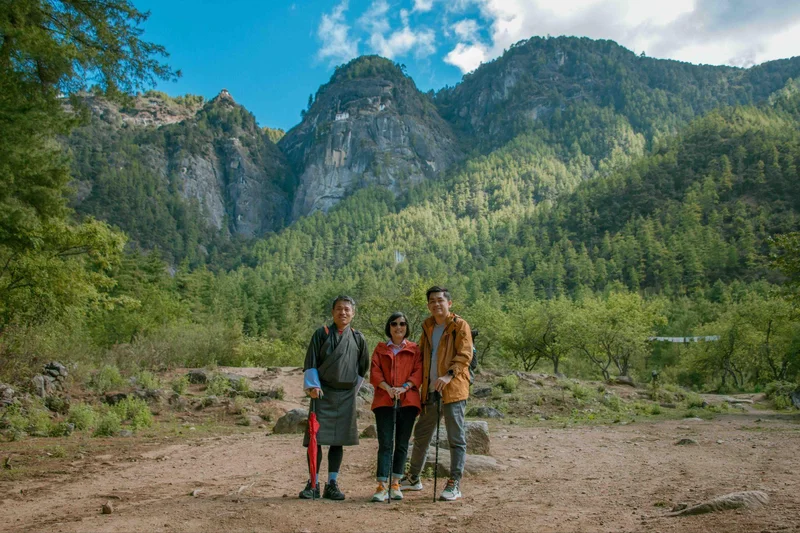
Taktsang Monastery, famously known as Tiger's Nest in Bhutan or Paro Taktsang, is located in the Paro district. As one of the most venerated places of pilgrimage in the Himalayas, the monastery clings precariously to a granite cliff towering 900 meters (3,000 feet) above the valley floor. It is situated at an elevation of 3,120 meters (10,240 feet) above sea level.
The journey to the monastery begins at the Ramthangkha base, located 12 kilometers from Paro town. Depending on your fitness level, the climb typically takes between 2 to 3 hours.
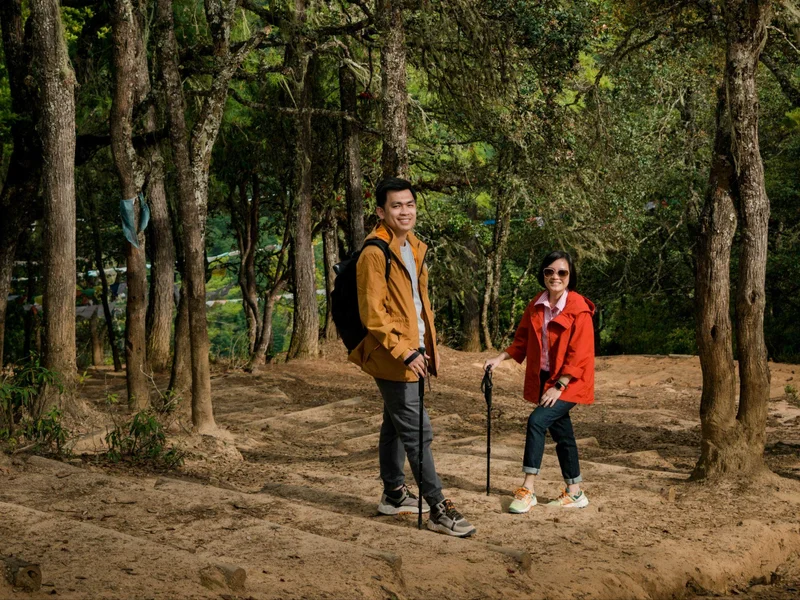
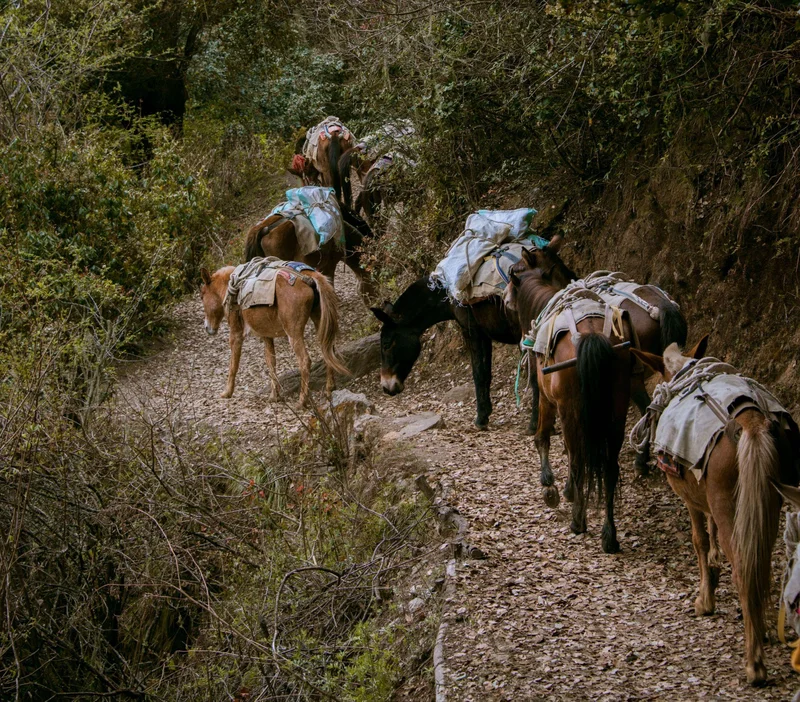
The trail of the Tiger's Nest was enhanced during the COVID-19 pandemic in 2020. Enhancements to the hiking experience include a separate path for humans and horses on the new trail, a significant improvement over the old path where both shared the same walkway. To ensure comfort, more benches, canopies, and resting places have also been built along the way. This means that you can take a break anytime when you want to catch your breath, allowing you to enjoy your walk up at your own pace while taking in the magnificent views of the Himalayan mountains.
Book a Tiger’s Nest Tour
Hike Details
Feature |
Detail |
Total Distance |
8 km (5 miles) round trip |
Elevation Gain |
~700m - 900m |
Highest Point |
3,120m (10,240 ft) |
Difficulty |
Moderate to Strenuous |
Terrain |
Dirt trails, forest paths, and stone steps |
The Hike to Tiger's Nest: Step-by-Step Details
The trek to Paro Taktsang is a 4-kilometer (2.5-mile) journey one way, gaining approximately 700m to 900m in elevation. Depending on your pace, the round trip typically takes 4 to 5 hours.
Phase 1: The Trailhead (Base to Cafeteria)
The journey begins at the Ramthangkha base, located about 12 kilometers from Paro town.
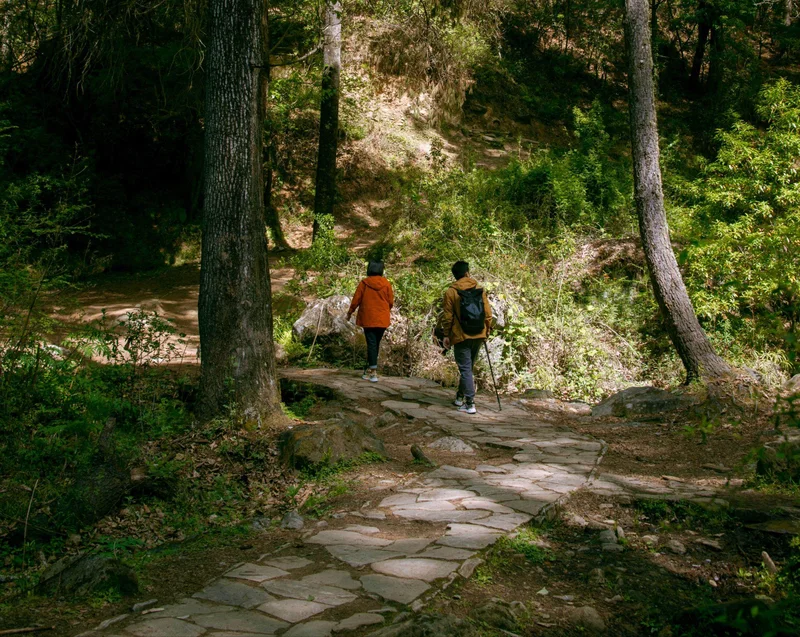
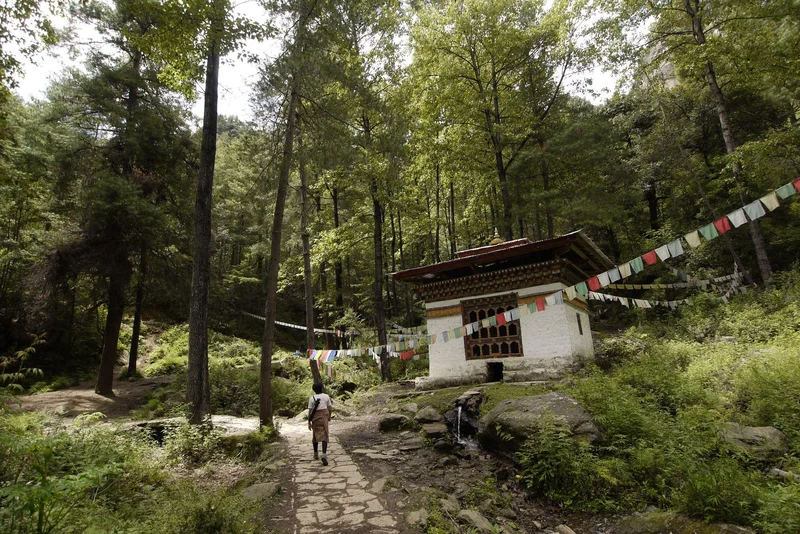
The Path: The initial climb is a wide, dirt switchback trail through a shaded forest of blue pine and rhododendrons.
Rentals: At the base, you can rent a mule (USD 15–18) to carry you to the halfway point, or a wooden hiking pole (USD 1) which is essential for the rocky sections.
Duration: 1 to 1.5 hours.
Phase 2: The Halfway Point (Taktsang Cafeteria)
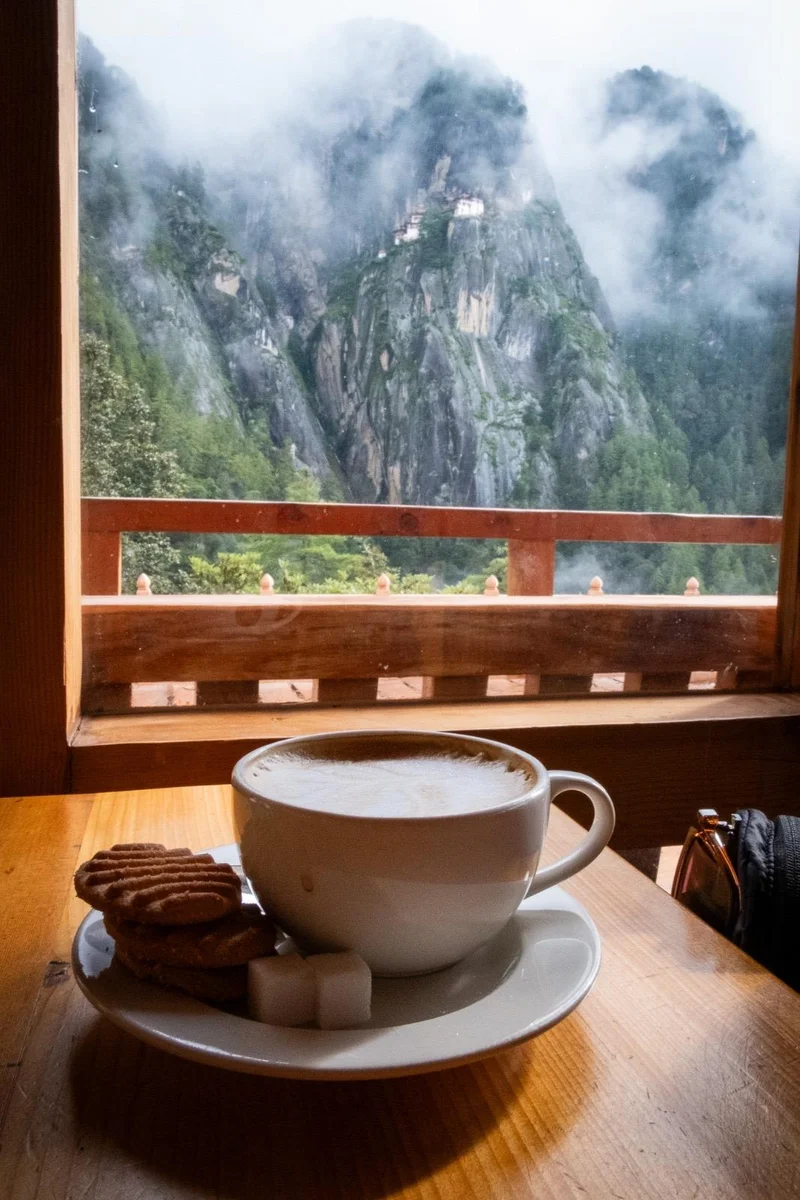
At approximately 2,950 meters (9,678 feet), you reach the famous Taktsang Cafeteria.
The Experience: This is the primary rest stop where most hikers take a break for tea or a vegetarian buffet lunch.
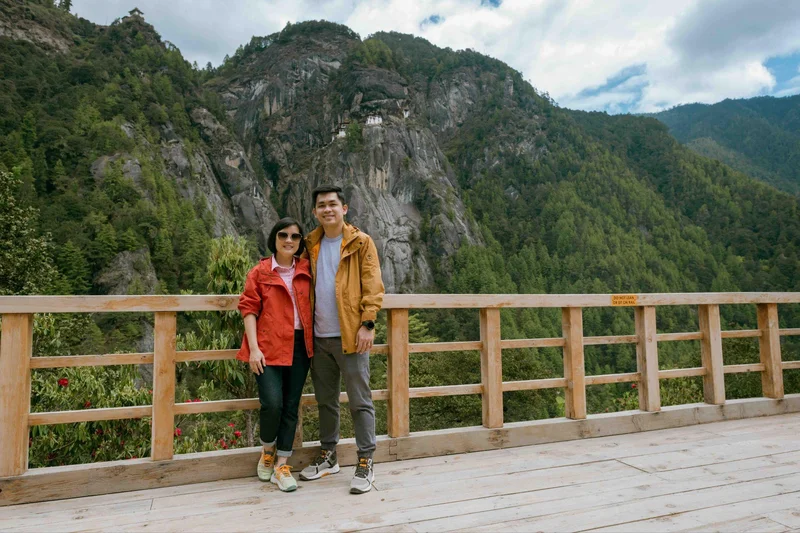
The View: This is the first clear, classic view of the monastery clinging to the opposite cliff. Many travelers who find the hike too strenuous choose to end their journey here, as the view is spectacular.
Mule Drop-off: If you rented a mule, this is where you must dismount. The remainder of the hike must be completed on foot.
Phase 3: The Viewpoint & Stone Steps
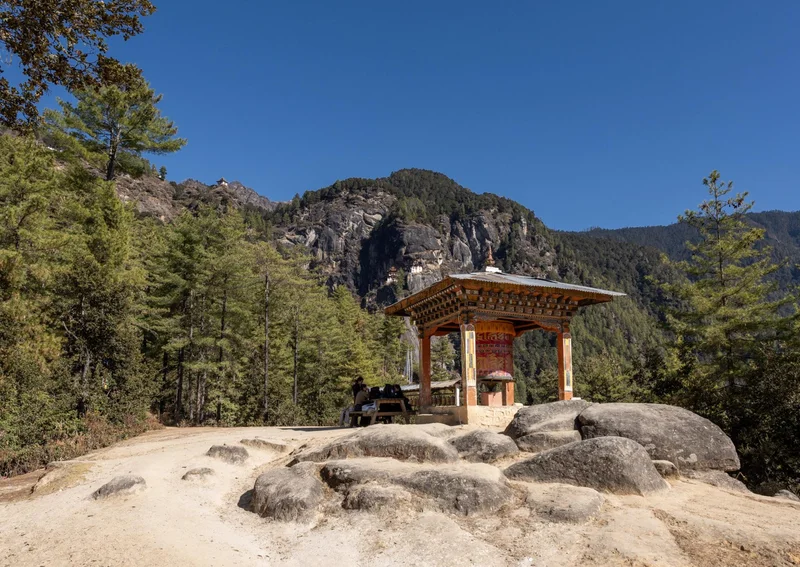
From the cafeteria, the trail becomes narrower and slightly gentler for about 45 minutes until you reach the Second Viewpoint.
The Descent: At the "Million Dollar Viewpoint," the dirt path ends and becomes a series of 700+ concrete and stone steps.
The Gorge: You will descend deep into a canyon, crossing a bridge over a sacred 60-meter waterfall, before the final 120-step ascent to the main entrance.
Photography: This descent offers the most iconic, unobstructed photo opportunities of the monastery.
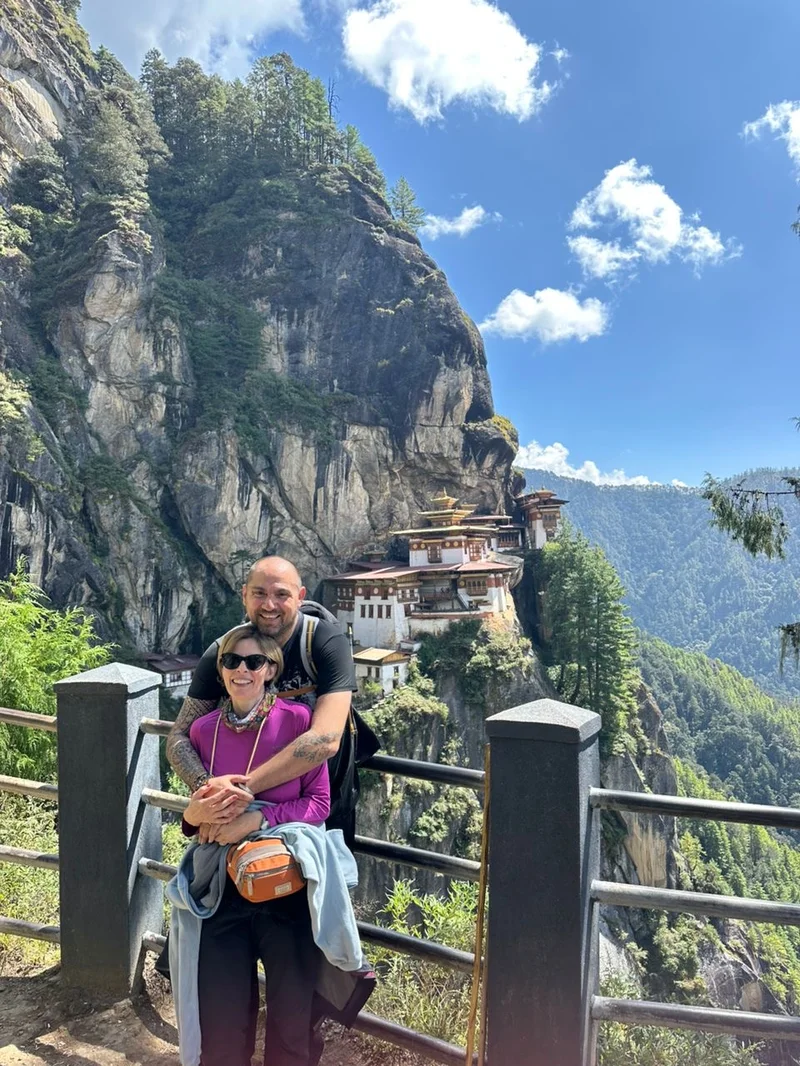
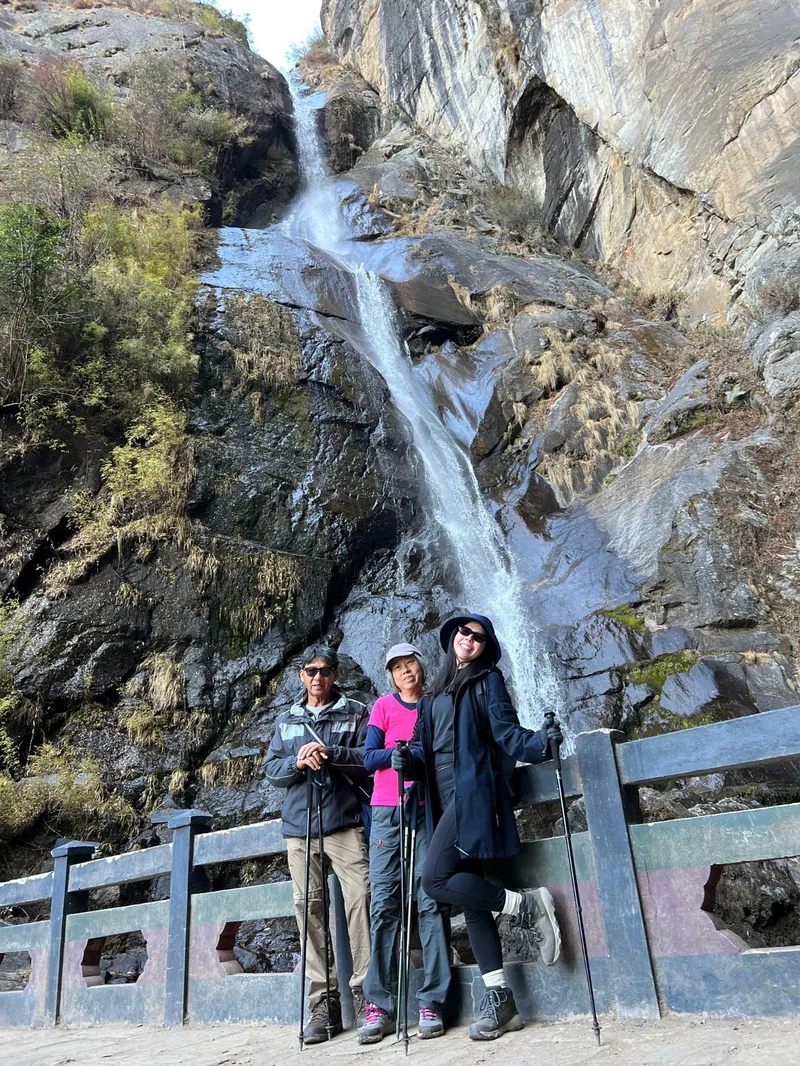
Along the way, the trail is adorned with colorful prayer flags and multiple viewpoints that offer the most iconic photographic angles of the complex. Once at the summit, visitors must deposit all electronic devices in secure lockers, as photography is strictly prohibited within the sacred temple rooms.

PRO TIP
Starting the trek between 7:00 AM and 8:00 AM is highly recommended to avoid midday crowds and ensure arrival before the monks' daily lunch break.
Phase 4: Entering the Monastery
Once you reach the main gates at 3,120 meters (10,240 feet):
Security Check: You are required to deposit all bags, cameras, and mobile phones in secure lockers. Photography is strictly prohibited inside the complex.
The Temples: The complex consists of four main temples and eight caves. You will navigate narrow, interconnected staircases carved directly into the rock to visit the various shrines, including the Cave of Guru Rinpoche.
Legends
The Legend and History - Why Is It Called The Tiger's Nest In Bhutan?
The legend of Taktsang (Tiger's nest) evolved form 747 AD when Guru Padmasmbhava (also known as Guru Rinpoche) chose a cave on a sheer rock face to meditate and, assuming a wrathful form, Guru Dorji Drolo, astride a tigress to subdue the evil spirits in the locality. Legend has it that the tigress was actually Yeshi Tshogyal, a consort of Guru Rinpoche, who has transformed herself into a fearsome animal to subjugate spirits. It is also said that Yeshe Tshogyal transformed herself into a tigress to carry Guru Rinpoche on her back from Singye Dzong in Eastern Bhutan to Taktsang.
Guru Rinpoche then performed meditation at the very same site and emerged in eight incarnated forms (manifestations). Taktsang (Tiger's Nest monastery) thus became one of the most important Buddhist sacred sites in the Himalayan Buddhist world. At Taktsang, Guru Rinpoche revealed the Mandala of Pelchen Dorje Phurpa, and delivered sublime teachings to his disciples. He meditated in the cave for 3 years, 3 months, 3 weeks and 3 days before subjugating the malicious spirits, and concealed profound treasures for the benefit of sentient beings.
The Founding Of Paro Taktsang (Tiger's Nest Monastery)
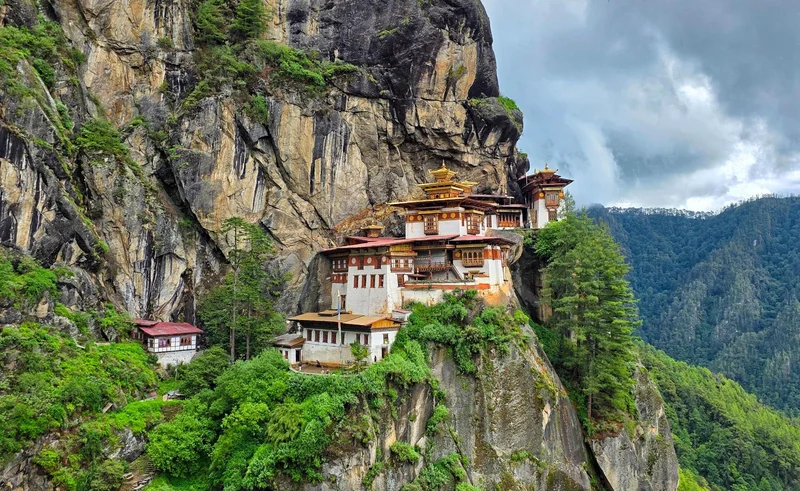
The first temple was built by Sonam Gyaltshen - a Nyingma Buddhist master - probably in 1508 at Taktsang Pelphug. In 1645, the whole site was offered to Zhabdrung Ngawang Namgyel, the founder of the nation state of Bhutan. It was at Taktshang, during the Tibetan war of 1644/46, that Zhabdrung and his Nyingmapa teacher, Terton Rigdzin Nyingpo, first performed a ritual invoking Padmasambhava and the protective deities. Zhabdrung instructed Gyalsey Tenzin Rabgye, who subsequently became the fourth temporal ruler of Bhutan, to build the temple of the Eight Manifestations of the Guru there. The construction work began ion the 10th month of the Water Monkey Year (1692) and the two-storied temple was completed in 1694.
Between 1961 and 1965, the monastery was renovated by the 34th Je Khenpo (Chief Abbot), Shedrup Yoezer. Additions were made in 1861-65 and 1982-83, and then in 1992. On April 19, 1998, Taktsang was damaged in a tragic blaze. The current structure that exists was reconstructed in 2005. The meticulous reconstruction to its full glory was spearheaded by the Fourth King of Bhutan, His Majesty Jigme Singye Wangchuck. During this fire, and the one in 1951, the speaking bronze statue of Guru Sungjonma is the only item that miraculously survived unscathed in both times.
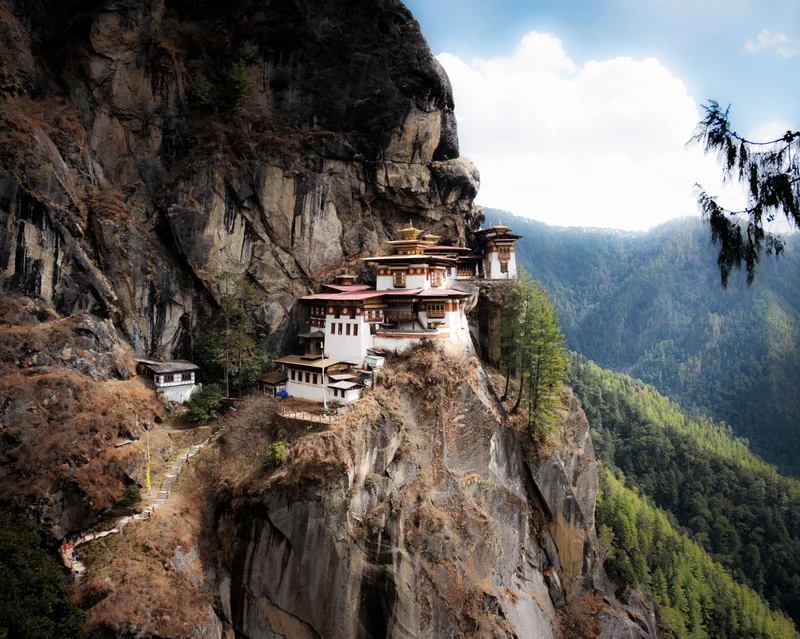
There are currently four temples surrounding the main temple of Taktsang Lhakhang. All the buildings in the complex are interconnected by staircases with steps carved into the rock. The exterior of the complex has white-washed walls with gold painted roofs. A prayer wheel is located in the courtyard and it is being rotated by residing monks at 4 a.m. daily to mark the beginning of a new day. The interior of the temples is also decorated with the finest details to reflect the finest Varjayana Buddhist tradition.
The Shrine Of Self-Speaking Guru
The story goes that the statue of the Guru was sculptured by Pentsa Deva at Punakha Thangdzong and taken to Taktsang. Upon arriving at the cliff across the sacred site of Taktsang, the monks were at a loss on how to carry the 12-feet statue across the canyon to the temple site. The statue is supposed to have said: "Do not worry, for someone shall come to carry me to Taktsang!" Subsequently, the statue was miraculously transported and, thereafter, the place is known as the Temple of the Self-Speaking Statue of the Guru.
The shrine contains beautiful paintings of the eight manifestations of Guru Rinpoche and his twenty five chief disciples on the rock face. It also contains the throne used by Gyalse Tenzin Rabgye. All the sacred objects pertaining to the Eight Manifestations of Guru Rinpoche were built by famous Niwari artisans Pentsa Deva, Dharma Deva and Dharmashri.
Logistics
7 Tips for Visiting The Tiger's Nest In Bhutan
Start early if you want to avoid the crowd and the heat.
Wear a pair of good walking shoes to protect your ankles, bring a hat and sunscreen.
You can also rent a walking stick at the base of Tiger's Nest if required.
Stay hydrated and take your time. The ascent gains an elevation of 700 m, although it is below an altitude of 3000m, it is wise to pace yourself to avoid overexertion and result in altitude sickness.
Regulate your breathing to avoid panting. You will expend more energy if you pant.
Bring a warm jacket as your body cools down pretty fast when you are visiting the temple.
Bring some snacks to chew on once you reach the peak to restore your energy and keep warm for the return journey.
You are required to deposit all your electronic and photography equipment with the sentry before entering the complex.
Photography is prohibited inside the temple as with all other temples and monasteries in Bhutan. You are required to remove your shoes and headgears upon entering Tiger's Nest monasteries. Take plenty of photos to keep the memories of your spiritual journey in Bhutan.
Entrance Fee In Taktsang Monastery
The entrance fee for Taktsang Monastery is 2,000 Nu (approximately USD 24) per adult. To support family travel, children aged 6 to 18 receive a 50% discount (approx. USD 12), while children aged 5 and below are exempted from payment. When you book your journey with Druk Asia, all monument entrance fees are seamlessly included in your tour package, ensuring a hassle-free experience at the gate.
Entry Restrictions In The Taktsang Monastery
Under the same revision, there will be special dates on the Bhutanese lunar calendar whereby only Bhutanese will be allowed to visit Taktsang. The six auspicious dates in the Bhutanese calendar are:
5th of the 1st month (Chotrul Duchen)
10th day of the 3rd month (Zhabdrung Kuchoe)
15th day of the 4th month (Lord Buddha Parinirvana, Vesak Day)
4th day of the 6th month (first sermon of Lord Buddha)
22nd day of the 9th month (Descending day of Lord Buddha)
10th day of the 5th month (Birth anniversary of Guru Rinpoche)
Tours to the Tiger's Nest
Discover The Tiger's Nest In Bhutan
The Tiger's Nest Monastery, perched on a cliffside, is one of Bhutan's most iconic landmarks. Its unique location, spiritual significance, and picturesque scenery make it a compelling destination for travellers. Visiting the Tiger's Nest is not only a physical journey but also a chance to connect with Bhutan's rich cultural heritage and natural beauty.
Ready to explore the Tiger's Nest and experience the magic of Bhutan?
Here are some popular tours that include hike to the Tiger's Nest Monastery:
Contact Druk Asia to plan your unforgettable adventure to this remarkable destination.
Royalties & Celebrities Who Visited Tiger's Nest In Bhutan
Over the years, many prominent people from all over the world have visited this majestic icon of Bhutan. Some of these personalities include royals from the House of Windsor like Prince Charles who stopped to do a painting of the Tiger's Nest near the cafeteria in 1998. The Duke and Duchess of Cambridge, Prince William and Kate Middleton also visited Bhutan on the invitation of the Fifth King of Bhutan, His Majesty Jigme Khesar Namgyel Wangchuck in 2016. From Japan - Princess Mako and Crown Prince Akishino also visited Tiger's Nest in 2018 and 2019 respectively. Other royalties included the royal families from Thailand, Norway and many more Europeans royalties.
From Asia - Jet Li meditated at Tiger's Nest in 2017 and actor Tony Leung, famed for holding his wedding in Bhutan back in 2008, is also rumoured to be a frequent visitor of Bhutan and Tiger's Nest. From Hollywood - Cameron Diaz, Michael J. Fox, Drew Berrymore, Demi Moore and Leonardo DiCaprio have all visited Bhutan and the Tiger's Nest throughout the years. Perhaps one show that brought Bhutan to the fore for Hollywood would be "Little Buddha" where Keanu Reeve plays the role of Siddhartha in this 1993 movie.
You may also have spotted a black and white photo of Tiger's Nest in Guy Richie's most recent movie "The Gentlemen''. Look out for the photo of Tiger's Nest in Charlie Hunman's kitchen when he was negotiating with Hugh Grant. In fact, a photo of Tiger's Nest has been spotted in quite a few movie sets as a little background detail.
Frequently Asked Questions About The Tiger's Nest In Bhutan
What is the altitude of the Tiger's Nest Monastery?
The altitude of Tiger's Nest Monastery (Paro Taktsang) is 3,120 meters (10,240 feet) above sea level. The hike involves a vertical elevation gain of approximately 900 meters (3,000 feet) from the Paro valley floor.
Is there a minimum age requirement for the hike?
There is no official minimum age to hike to Tiger's Nest. However, due to the 900m elevation gain and the 700+ stone steps at the end, it is generally recommended for children aged 5 and older who are used to walking. For toddlers and younger children, parents often use high-quality hiking baby carriers.
Can children ride horses and mules?
Yes, children can ride the horses and mules from the base to the halfway cafeteria for approximately $15–18 USD. This is a popular option for families to save the children's energy for the final, most scenic part of the trek. Please note that for safety reasons, children must be able to sit upright and hold on independently, or be closely supervised by a guardian walking alongside.
Are there any age-related restrictions for entry?
While the hike is open to all ages, the monastery is a sacred site. All visitors, regardless of age, must adhere to the dress code (shoulders and knees covered) and maintain a quiet, respectful demeanor inside the temple complexes.
Is the hike suitable for senior travelers?
Many travelers in their 70s and 80s successfully complete the journey by pacing themselves. The new trail improvements—including separate paths for humans and horses, as well as frequent benches and resting canopies—allow seniors to take breaks as needed to catch their breath and enjoy the Himalayan views at their own pace.
What Is The Best Time Of Year To Visit The Tiger's Nest Monastery?
The best time to visit is during the spring and autumn months (March to May and September to November) when the weather is mild and the skies are clear. Winter can be cold and snowy, while the summer months can be rainy.
Are There Any Facilities Or Amenities At The Tiger's Nest In Bhutan?
The monastery itself is not equipped with modern facilities, but there are rest stops and small tea houses along the hiking trail where visitors can rest, buy snacks, and use basic restroom facilities.
What Should I Pack For The Trek To The Tiger's Nest In Bhutan?
Essential items to pack include comfortable hiking shoes, layered clothing, a hat, sunscreen, water, snacks, a rain jacket, and a camera. A walking stick can also be helpful for the trek.
Are There Any Places To Rest Or Eat Along The Way To The Tiger's Nest In Bhutan?
Yes, there are rest stops and a cafeteria known as Taktsang Cafeteria halfway up the trail where visitors can rest, enjoy refreshments, and take in the scenic views before continuing their ascent.
Can I Take Photographs Inside The Tiger's Nest In Bhutan?
No, photography is not allowed inside the monastery to preserve its sanctity and protect the artefacts. However, you can take photos of the exterior and the beautiful surrounding landscape.
How Physically Challenging Is The Trek To The Tiger's Nest In Bhutan?
The trek is moderately challenging, with steep and uneven paths. It requires a reasonable level of fitness, but you may also hire a horse to bring you up to the halfway point to enjoy the view should you have difficulty hiking. However, many non-hikers managed to hike all the way up to the Tiger's Nest while pacing well and taking their time.
Is altitude sickness common on the Tiger's Nest hike?
While the monastery is at 3,120m, most people have already spent 2-3 days acclimatizing in Paro or Thimphu before the hike. If you feel dizzy or have a severe headache, stop immediately. Pace your breathing to avoid panting, as "over-breathing" can lead to faster exhaustion.
Can I use a drone?
No. Drone use is strictly prohibited at Taktsang and most religious sites in Bhutan without a special government permit, which is rarely granted to tourists.
What should I wear for the Tiger's Nest hike?
You must have your shoulders and knees covered. A t-shirt is acceptable. You will be asked to remove your shoes, hat, and sunglasses before entering any of the internal temples.
What happens to my phone at the entrance?
Before entering the final monastery complex, you must deposit your phone, camera, and backpack in a locker provided by the security sentries. You will receive a key or token; your belongings are safe, but no recording devices are allowed inside the sacred rooms.
Is the Tiger's Nest monastery open every day?
The monastery is generally open from 8:00 AM to 5:00 PM, but it closes daily from 1:00 PM to 2:00 PM for the monks' lunch break. Plan your arrival so you aren't waiting at the gates during the lunch hour.